
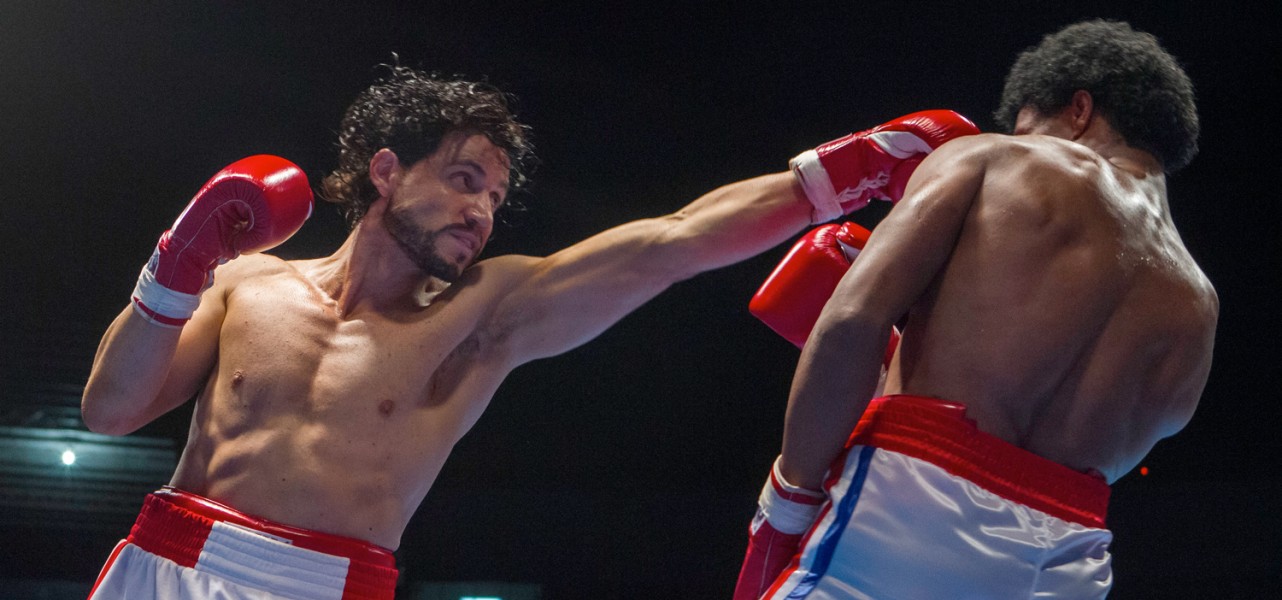
In 2017, I stumbled across a sports biopic called “Hands of Stone.” It was released a year before and stars Edgar Ramírez, Robert De Niro, and Usher Raymond who depicted legendary boxer Sugar Ray Lenord. De Niro plays the coach of Ramirez’s character and attempts to teach him to think in terms of strategy and, when he’s in the ring, to be more than an onslaught of tactics.
That moment, when De Niro’s character explains what a strategy is, and the scenes that follow that explanation, were a revelation for me. They led me to an understanding of the relationship between terms I’d heard and used so often without any true grasp of their meaning: goals, strategies, tactics.
I started to see how tactics collectively work in service to a strategy which itself serves as a means to accomplish a clear goal. As I thought about this, I realized that I also needed to understand when to stop employing a tactic. To spot when a tactic has served its purpose and move on. Some sort of lesser goal for each tactic that, once achieved, signaled advancement of the plan.
My understanding of goals, strategies, tactics, and what I called “minor goals” got clearer the more I examined the relationship between them. Still, I wondered how I’d keep hold of that understanding outside of this concentrated time of study. I wanted some sort of mnemonic device to easily access this thinking and use it in my work and everyday life.
So I wrote a simple sentence; a statement of intent that connected the thing to be achieved with the way to achieve it. Here’s the rough frame of it:
In order to [MAJOR GOAL] I will [STRATEGY] by [TACTIC] until [MINOR GOAL].
Calling the topmost aim a “major goal” helped me distinguish it from the many minor goals achieved along the way. In fact, in most cases, the last part of this sentence, “by [TACTIC] until [MINOR GOAL],” will be repeated several times to list various tactics and the minor goals used to determine when to retire those tactics.
For fun, let’s take this back to Hands of Stone and layer the framework over a bit of the movie. (Heads up, a few spoilers ahead.)
Ramirez plays Panamanian boxing legend Roberto Durán. He and his 72 year old trainer Ray Arcel, a legend in the sport himself played by De Neiro, are going up against Sugar Ray to try and take the title of World Welterweight champ. No easy feat.
Here’s how I break down the major goal, strategy, tactics, and minor goals of the story. It’s all with consideration of what Durán and Arcel are trying to achieve and what we see Durán do after his trainer explains strategy to him as distinct from tactics.
Major Goal
Win the World Welterweight Championship fight and title on June 20, 1980
Keep in mind that major goals should be SMART goals. They should be Specific, Measurable, Achievable, Realistic and Time-based.
Strategy
Put opponent, Sugar Ray, off his game.
The strategy is the heart of the plan. It’s the thing that makes an aim achievable by validating tactics and moving them toward the major goal.
Tactics
Collectively, tactics are the boots-on-the-ground actions employed to achieve the major goal. Minor goals are important to the efficiency of the plan. They let you know when your tactic has achieved its purpose and can be retired. Here are the tactics I see Durán employ in the story:
Disrupt Sugar Ray’s restaurant dinner
Minor Goal: Get Sugar Ray annoyed enough to get up from the dinner table.
Insult Sugar Ray’s spouse
Minor Goal: Make Sugar Ray angry enough to take a swing at me.
Humiliate Sugar Ray in the ring
Minor Goal: Get Sugar Ray visibly frustrated in his corner between rounds.
Mnemonically, here’s how Durán’s apparent plan could be remembered:
In order to win the World Welterweight Championship fight, I will put Sugar Ray off his game by disrupting his restaurant dinner until he’s annoyed enough to get up, and by insulting his wife until he’s angry enough to swing at me, and by humiliating him in the ring until he’s visibly frustrated in his corner between rounds.
For the sake of quicker recollection of the plan, we can temporarily remove the minor goals creating an easier statement to remember:
In order to win the championship fight, I will put Sugar Ray off his game by disrupting his fancy dinner, insulting his wife, and humiliating him in the ring.
Not the most honorable plan, but a handy way to understand, recall, and execute it all the same!
Two more thoughts
- This is my current thinking and understanding of major goals. It’s as subject to maturing and evolving as I am.
- There’s no one way to build a brand, business, or company. For every ‘expert’ evangelizing the way forward, there’s another evangelizing a completely different path. Both with their own meaningful and measurable successes to speak of.
For me, this major goal framework created a way of thinking about goals and strategies that was as practical as it was simple. It's helping me and I’m grateful to God for it.